

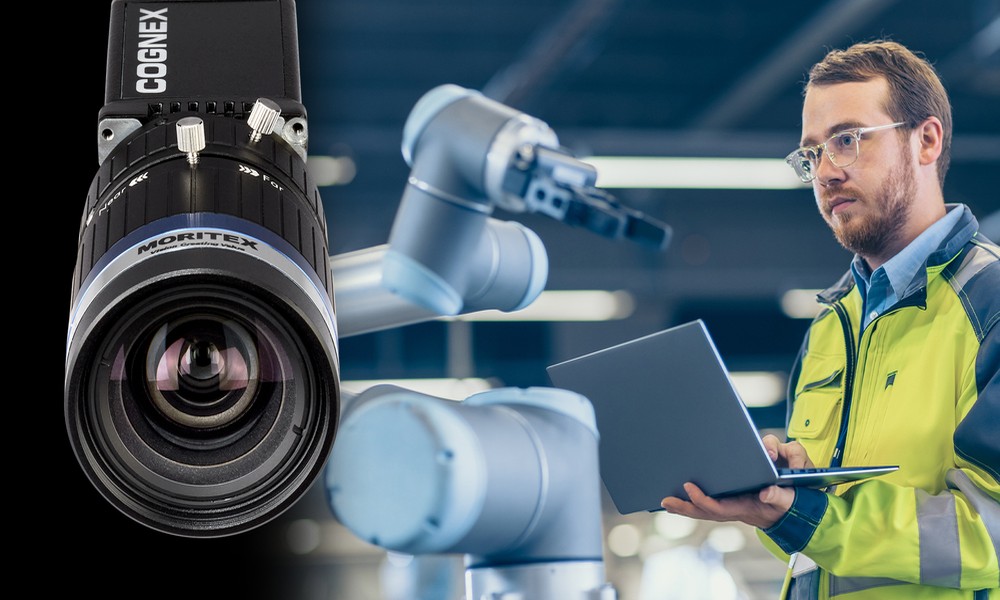
Industrial automation has evolved far beyond fixed robotic movements and repetitive assembly tasks. Modern production lines require flexibility, precision, and the ability to adapt quickly to changing product specifications. One of the most critical components enabling this adaptability is end-of-arm tooling, commonly referred to as EOAT. Positioned at the interface between the robot and the workpiece, EOAT determines how effectively a robotic system can interact with objects, materials, and production environments.
In many facilities, the performance of an automation cell is judged primarily by the robot itself. However, even the most advanced robotic arm cannot operate efficiently without suitable tooling. The gripping, lifting, sensing, and handling functions performed by EOAT directly influence cycle times, product quality, safety, and maintenance requirements. Production managers often discover that tooling limitations become the primary bottleneck long before the robot reaches its operational limits.
The growing adoption of collaborative robots has also increased the importance of modular and lightweight EOAT solutions. Smaller manufacturers and integrators now seek tooling systems that can be deployed quickly without extensive customization. As manufacturing shifts toward shorter production runs and higher product variation, adaptable tooling becomes a strategic asset rather than a simple accessory.
Types of End-of-Arm Tooling Used in Automation
EOAT encompasses a broad category of devices designed to perform specific handling or processing functions. Grippers are among the most common solutions and are used for picking, positioning, and transferring products. Depending on the application, these may include mechanical grippers, vacuum grippers, magnetic grippers, or soft robotic grippers designed for delicate items.
Mechanical grippers are widely used in automotive, packaging, and electronics industries because they provide reliable holding force and repeatability. Vacuum systems are preferred for flat surfaces such as glass, cartons, or sheet metal. Soft gripping technologies are becoming increasingly important in food processing and pharmaceutical environments where product deformation must be minimized.
Modern automation projects increasingly rely on modular solutions that simplify deployment and maintenance. Many integrators evaluating collaborative applications compare factors such as payload range, gripping force, compatibility with robotic platforms, and programming simplicity when selecting an Onrobot gripper for flexible manufacturing environments.
Apart from gripping systems, EOAT may include welding torches, dispensing units, cutting heads, screwdriving tools, deburring devices, and inspection sensors. In advanced production environments, multiple tools can be combined into automatic tool changers, allowing robots to perform several operations within the same cycle. This capability reduces equipment footprint and improves utilization rates.
Impact on Production Efficiency and Downtime
The effectiveness of EOAT directly affects overall equipment effectiveness (OEE). Poorly designed tooling can introduce alignment errors, inconsistent gripping, or excessive wear, all of which contribute to unplanned downtime. Maintenance managers frequently observe that tooling components experience higher wear rates than the robotic arm itself because they remain in constant physical contact with products and machinery.
Cycle time optimization is another area heavily influenced by EOAT selection. Lightweight tooling reduces inertia and enables faster robot movement, while efficient gripping mechanisms shorten handling times. In high-speed packaging or palletizing operations, even small reductions in gripping and release times can significantly increase throughput over long production runs.
Tooling design also influences energy consumption. Pneumatic grippers, for example, may generate ongoing compressed air costs, while electric grippers can provide more precise control and lower operating expenses in some applications. Engineers increasingly evaluate total lifecycle costs rather than focusing only on initial purchase price.
Maintenance accessibility is equally important. Tooling systems that allow rapid replacement of wear components reduce service interruptions and simplify preventive maintenance schedules. Standardized EOAT platforms can also minimize spare parts inventory and reduce training requirements for technical staff.
EOAT and Flexible Manufacturing Strategies
Manufacturers operating in volatile markets increasingly require production systems capable of rapid changeovers. Traditional dedicated tooling solutions often struggle in environments where product dimensions or packaging formats change frequently. Flexible EOAT systems help companies respond to shifting customer demands without extensive line modifications.
Collaborative robots have accelerated this transition because they are often deployed in mixed-production environments. Smaller factories may use a single robotic cell for multiple tasks throughout the day, requiring quick tool adaptation and simplified programming. Modular EOAT solutions support this operational model by reducing integration complexity and shortening commissioning time.
Sensor integration is becoming another defining feature of advanced tooling. Force sensing, proximity detection, and vision-assisted gripping improve reliability when handling variable or irregular products. Intelligent EOAT can compensate for positioning tolerances and reduce reject rates without requiring extremely rigid fixturing systems.
Data collection capabilities are also gaining importance. Some modern tooling systems can monitor gripping force, cycle counts, temperature, or vibration levels to support predictive maintenance strategies. This information allows maintenance teams to identify wear patterns before failures occur, improving uptime and production stability.
Key Considerations When Selecting End-of-Arm Tooling
Selecting appropriate EOAT requires balancing several technical and operational factors. Payload capacity must align not only with the product weight but also with acceleration forces generated during robotic movement. Underestimating these dynamic loads can lead to unstable handling or premature component wear.
Environmental conditions also influence tooling performance. High temperatures, dust, moisture, or chemical exposure may require specialized materials and sealing solutions. In food and pharmaceutical industries, hygiene standards often dictate the use of stainless steel and cleanable surfaces.
Compatibility with existing automation infrastructure is another major consideration. Integrators typically evaluate communication protocols, mounting standards, and software interoperability before selecting tooling components. Simplified integration reduces commissioning time and lowers implementation risk.
Safety requirements remain critical, especially in collaborative applications where humans and robots share workspaces. EOAT must maintain secure gripping performance while complying with force and pressure limitations established by industrial safety standards. Tool failure in collaborative environments can create serious operational and safety risks.
As industrial automation continues to expand across manufacturing sectors, EOAT will remain central to improving flexibility, productivity, and process reliability. Advances in gripping technology, sensing systems, and modular integration are transforming tooling from a passive mechanical component into an intelligent element of automated production systems.
